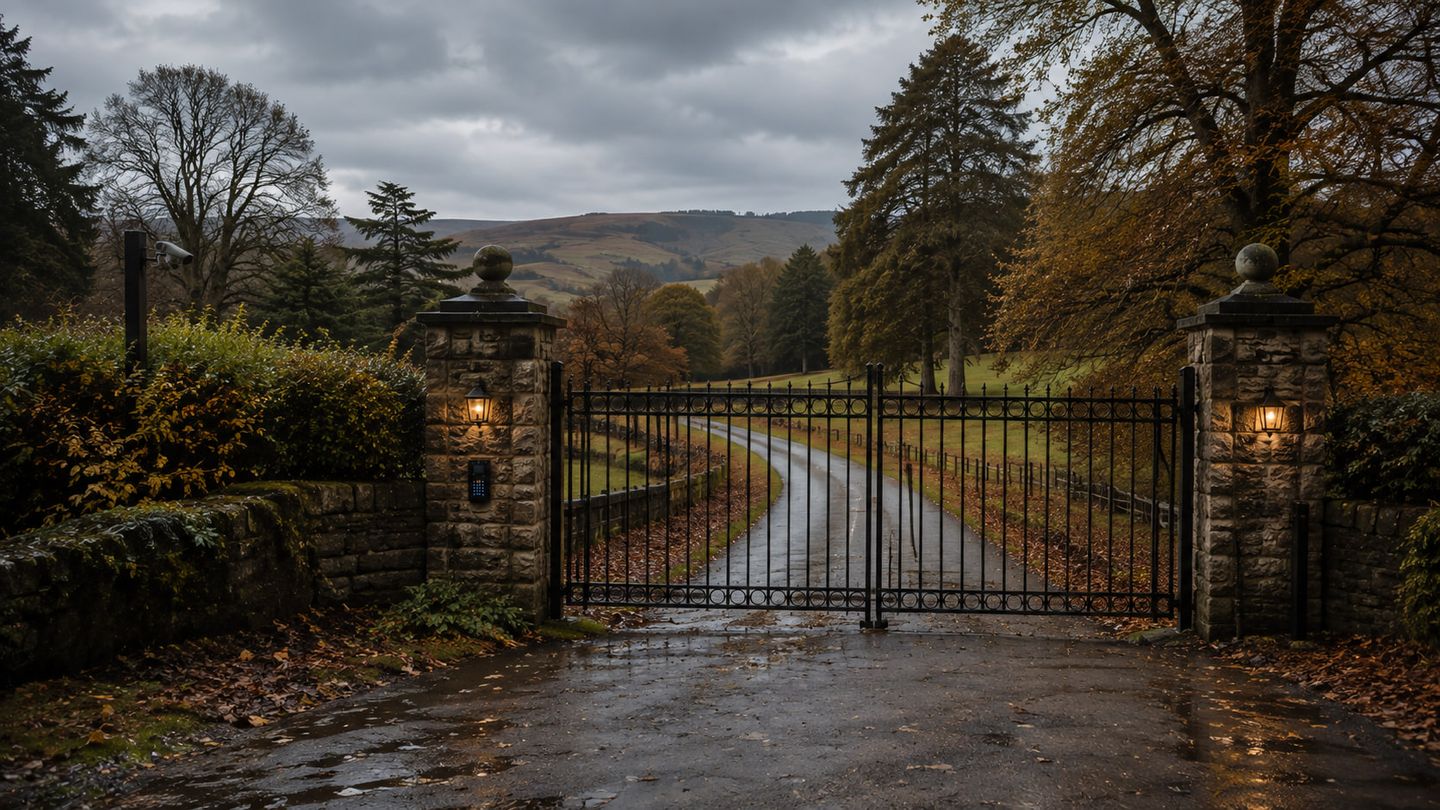
Rural estates & country property
Security for rural estates and country property
An estate has the opposite problem to a farm. Not one chokepoint but several entrances, not one household but half a dozen, and a boundary far too long to be worth defending as a line.
The mistake on estates is trying to secure the perimeter. A boundary measured in miles cannot be protected as a line, and any attempt produces a system that false alarms constantly and gets abandoned. What works is treating each entrance and each building as its own problem, joined by one system you can actually manage.
The other complication is people. Staff cottages, holiday lets, tenants, contractors and estate workers all have different access needs and different expectations of privacy. Getting that structure right at the start avoids a lot of awkwardness later.
Rural estates & country property
What this kind of site needs.
Long boundaries, several buildings of different ages and uses, and a requirement that none of it looks like a commercial security installation.
Entrances, not perimeter
Most estates have a main drive, a back drive and two or three farm accesses. Covering those properly, with identification cameras rather than general views, does more than any amount of boundary detection, and it does not react to every deer that crosses a field.
The unmanned back drive
There is almost always one. Rarely used, rarely lit, often not visible from any occupied building, and known to anyone who has worked on the estate. It usually needs its own camera and often its own connection.
Holiday lets and let cottages
Guests turning over weekly need access that changes weekly, which is a codes-and-fobs problem rather than a keys problem. It also raises real privacy limits on where cameras can point, and those get agreed at survey rather than argued about afterwards.
Outbuildings, workshops and stores
Estate yards accumulate machinery, tools, timber, fuel and equipment across buildings that are checked infrequently. Detection matters more than cameras here, because the loss can otherwise go unnoticed for a fortnight.
One system, several buildings, one point of contact
The practical value of doing this properly is that an estate manager has a single system to look at and one number to ring, rather than four unrelated installations put in by four companies over fifteen years.
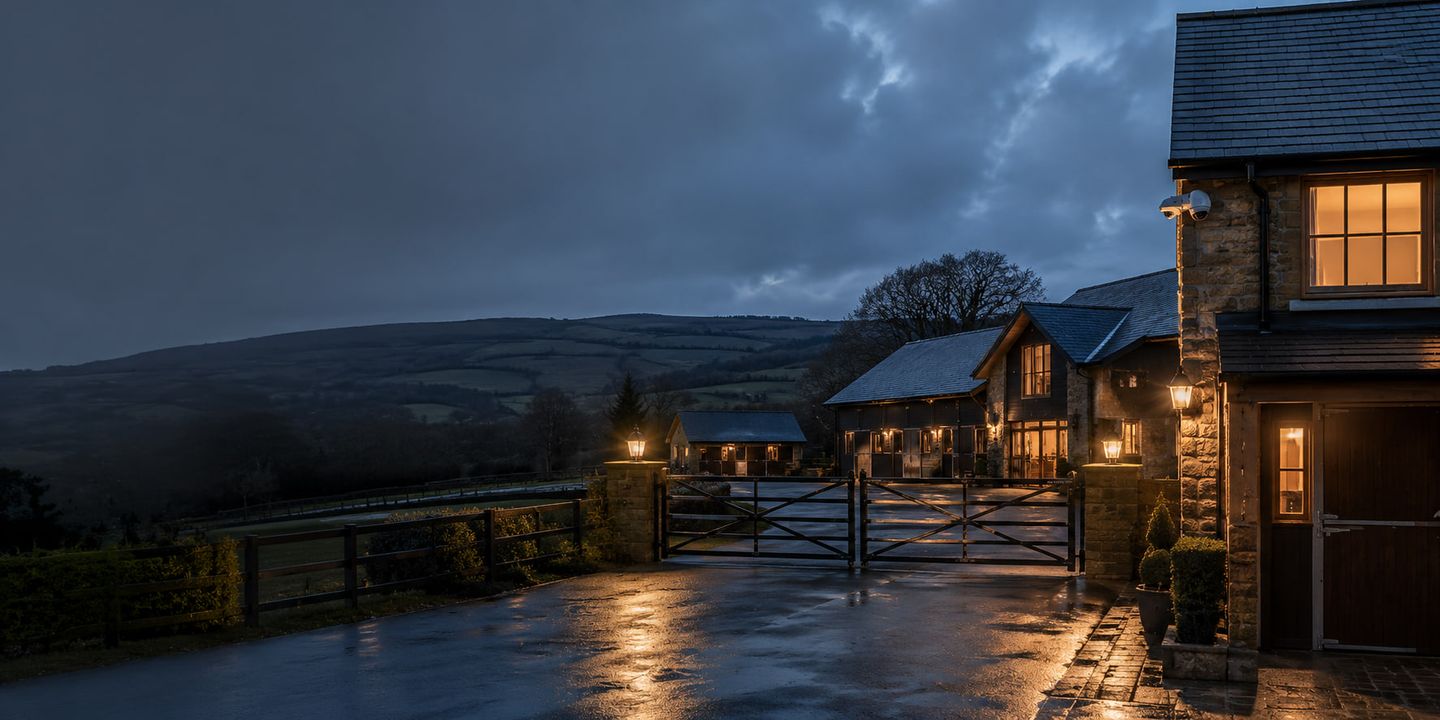
Discreet by requirement
On an estate the system has to do its job without announcing itself, and often without permanently marking the building it is fixed to.
Book a Security SurveyQuestions from yards like yours
Can one system cover buildings spread across the estate?
Yes. Buildings are joined by cable where that is sensible and by wireless links or their own connections where it is not, and presented as one system. Whether it is genuinely one system or several well-integrated ones is a survey decision driven by distance and topography.
What about cameras near let cottages?
Cameras that overlook a residential let bring privacy obligations you do not want to acquire by accident. We site cameras to cover estate approaches and estate buildings, and we will say plainly where a proposed position is a problem.
We have systems from three different eras. Can they be rationalised?
Usually, and that is a common brief on estates. A survey establishes what is current, what is serviceable and what is beyond support, and produces a plan for bringing it onto one platform over time rather than all at once.
Read next
Other property types
Next step
Book a security survey of your yard
An engineer walks the site with you, works out where the gaps actually are, and writes it up. You get a specification and a price for the property in front of us, not a package picked before we arrived.