CCTV
CCTV for yards, farms and remote buildings
Every camera on a rural site should have one job you can name. If nobody can say what a camera is there to see, it is decoration with a maintenance cost.
Rural CCTV fails in predictable ways. Cameras are hung where the cable was easy rather than where the risk is. Everything is set to a wide view, so an incident produces a figure in a hood at forty metres and nothing anyone can act on. And the buildings that most needed covering were the ones too far from the house to be worth the trench.
The survey works the other way round. We start from what you need to be able to prove, work out where a camera has to be to prove it, and then solve the cable or the wireless link. It is a slower conversation and it produces a shorter equipment list.
Camera by camera
What each camera is actually for.
The entrance, for identification
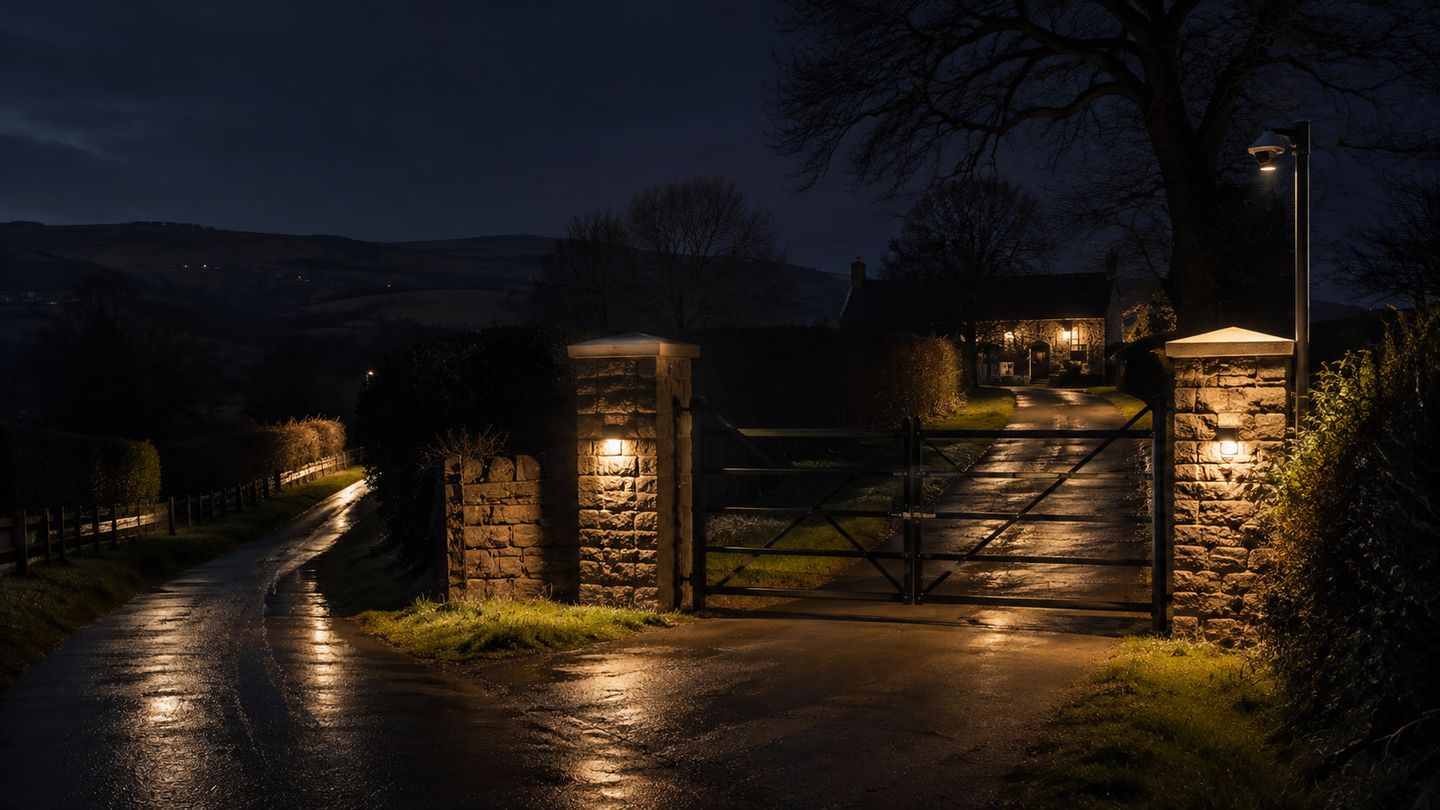
One camera doing a single job: capturing the vehicle and its plate at the point it enters, at the speed it actually enters, in the dark. This is a specific specification with a defined working distance, not a general view of the gateway.
The yard and stable block, for what happened
Wider views that let you replay an incident and see who went where. Useful for security and, on a yard, just as often for a loose horse, a delivery gone wrong or a dispute about a gate left open.
The machinery store and workshop, for detection
Cameras with analytics that can be told to care about a person or a vehicle crossing a line, and to ignore the tree behind it. Alerts to a phone are worth something only if they are rare enough to still be read.
The lorry park and trailer standing, for the hitch
Positioned for the towing vehicle and the coupling rather than a scenic view of the parked trailer. If something is towed away, the useful frame is the one with the plate in it.
Foaling and stock boxes, for welfare
The same cabling and recorder can carry welfare cameras in foaling boxes, isolation boxes and calving pens. Planning them together is usually cheaper than adding them afterwards.
How a rural system is designed differently
Light is designed, not assumed
A yard at two in the morning has no ambient light at all. We specify illumination and lens together, and we will tell you the distance at which a given camera stops being able to identify rather than just detect.
Weather, muck and cobwebs are planned for
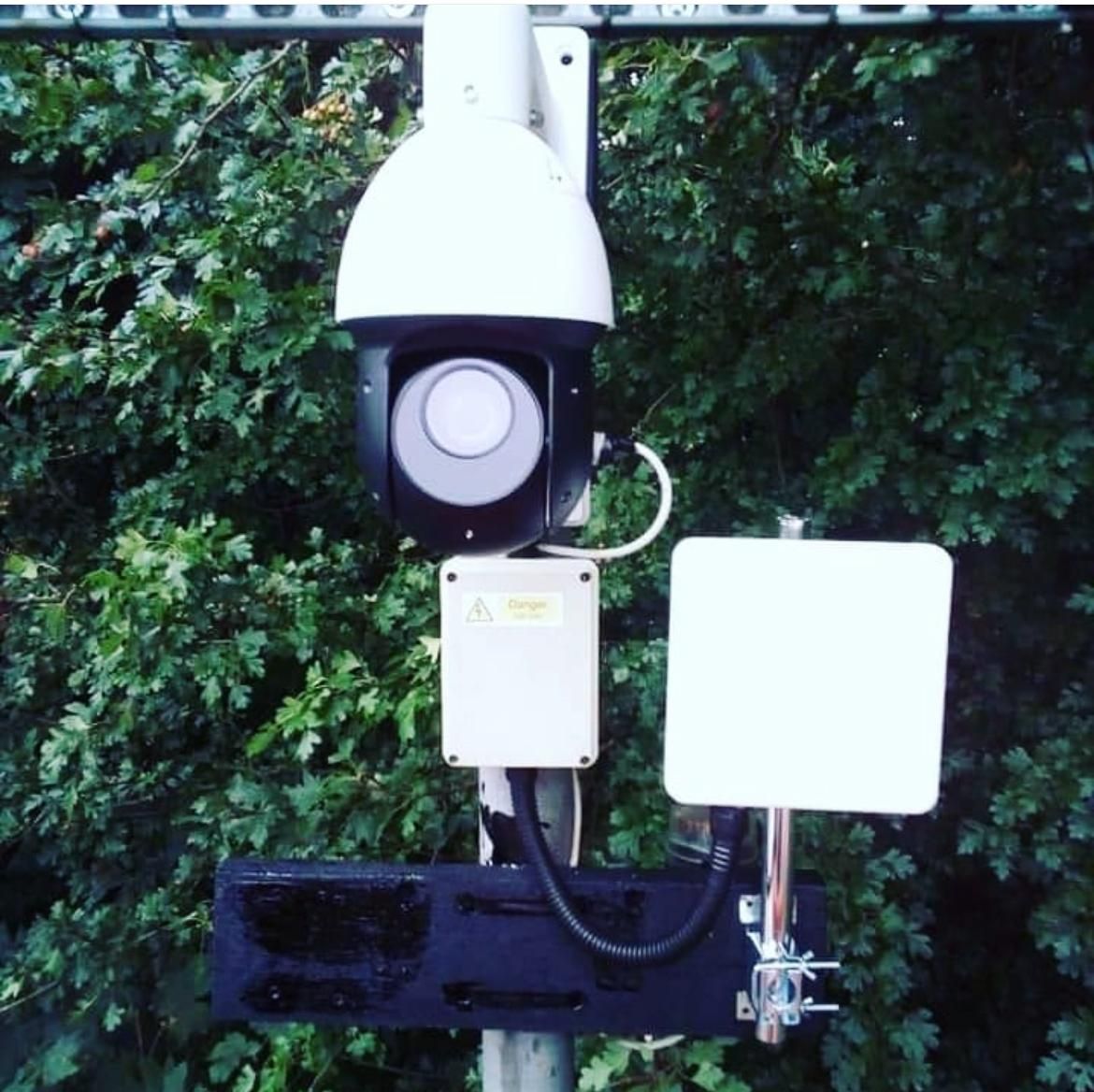
Housings, mounting height and aspect are chosen so lenses stay clear and seals last. Anything within reach of a loader bucket, a rubbing bullock or a wash-down hose gets sited accordingly.
Recording is sized for retention, not for a brochure
Storage is worked out from how many cameras, at what resolution and frame rate, for how many days you actually need to keep. Recorders are sited somewhere a thief will not find them next to the front door.
Remote access is set up properly
Viewing is configured for the people who should have it, with credentials that are not the factory default and without exposing a recorder directly to the internet. Where there is no usable broadband it runs over 4G or a wireless link.
Signage is part of the system
Visible camera signage at the entrance is a deterrent in its own right, and under UK data protection rules it is also part of doing surveillance lawfully when your cameras can see beyond your boundary.
Coverage follows value
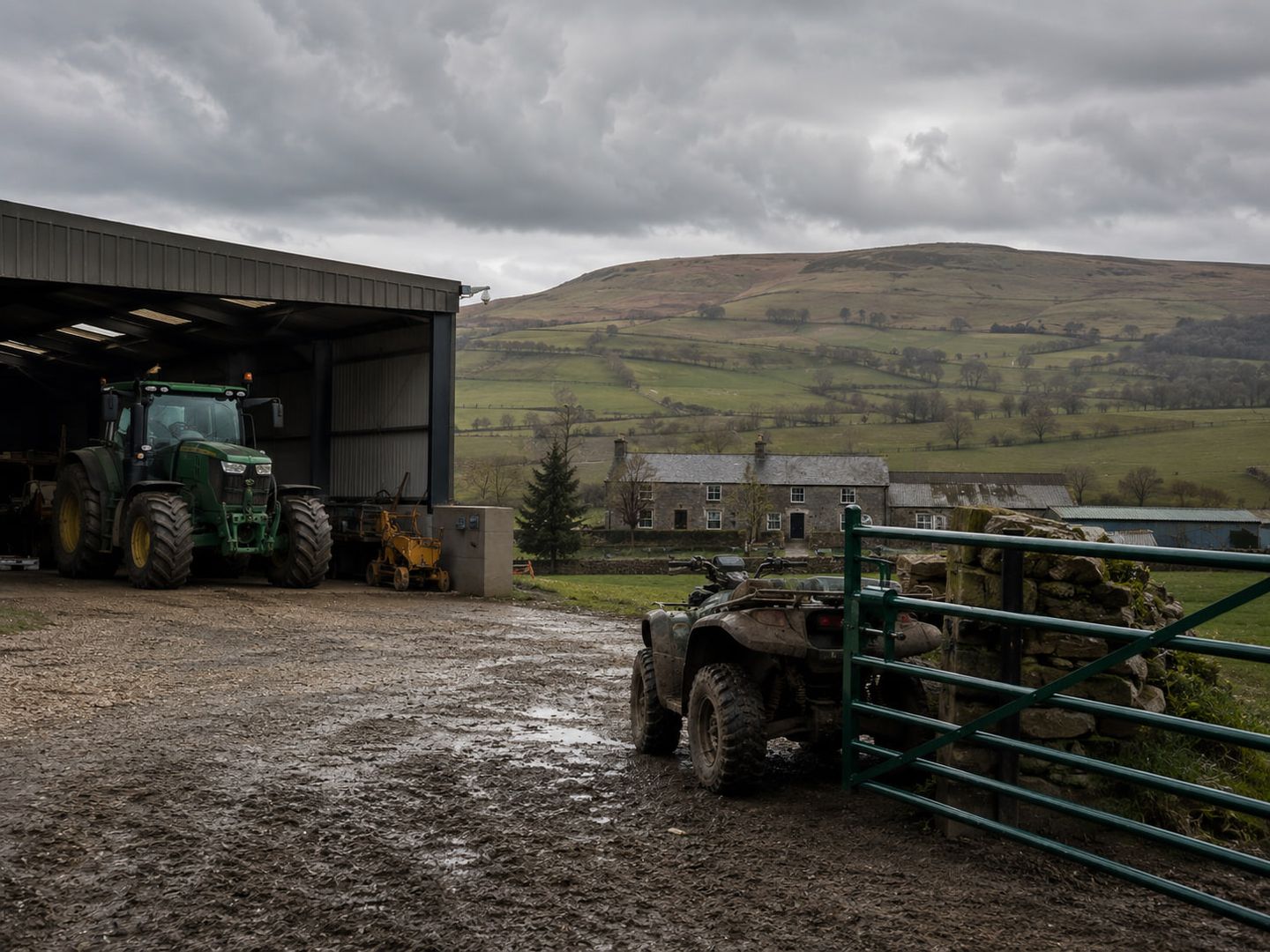
The camera that matters is rarely the one on the house. It is the one watching the way in.
Explore remote monitoringIn practice
The same six cameras, three different sites.
A camera plan is written for the property, not for the sector. These are the jobs the cameras end up doing on each kind of site.
On an equestrian yard
Identification at the yard entrance and the lorry park, wide cover of the barn aisle and the muck heap track, and welfare views inside foaling and isolation boxes carried on the same recorder. The tack room usually gets detection rather than a camera, because a camera in a tack room records a theft it cannot stop.
View equestrian securityOn a working farm
Plate capture at the road entrance, detection on the machinery shed and the fuel store, and a view of the workshop door. Buildings down the track come back over a wireless link rather than a trench, and analytics are set to care about a person or a vehicle and to ignore stock and hedges.
View farm securityOn a rural estate
Entrance and back-drive cover, discreet camera positions on listed and traditional buildings, and separate viewing for the house, the estate office and any holiday lets. Cabling and mounting are chosen to be reversible where the fabric matters.
View rural estates
Questions we get asked
How many cameras does a yard or farm need?
Fewer than most quotes suggest, positioned better. A common starting point is one identification camera at the entrance and two or three cameras covering the buildings that hold value. Adding cameras to a badly specified layout does not fix it.
Can I view the cameras on my phone?
Yes. It is set up over the site connection where there is one worth using, and over 4G where there is not. See remote monitoring and connectivity.
How long is footage kept?
You choose, and the storage is sized to match. Thirty days is a common figure for rural sites because the gap between someone looking and someone returning is often weeks rather than days. Keeping footage longer than you need is a data protection question as well as a cost.
My cameras can see the lane and my neighbour’s field. Is that allowed?
Domestic CCTV that captures beyond your own boundary brings you within UK data protection law, which means signage, a sensible retention period and being able to respond if someone asks for footage of themselves. We will point out where your views fall at survey. The ICO publishes plain guidance on this and we would rather you read it than take our word for it.
Can you upgrade the system we already have?
Often. If the cabling is serviceable and the recorder is not at the end of its life, replacing cameras and reusing infrastructure is usually the better spend. We will say clearly when something is not worth keeping.
Related systems
What CCTV usually sits alongside
Most sites end up with two or three of these working together. Each has its own page.
Intruder alarms
Detection zoned around tack rooms, workshops and fuel stores, set up so livestock and weather do not trip it.
Access control & gates
Entry that survives twenty liveries, a farrier, a vet and a feed delivery, without a key under the water trough.
Remote monitoring & connectivity
Getting a picture off a building with no broadband, and getting a response when something happens at 3am.
Fire detection
Early warning in stable blocks, hay and straw stores and workshops, where a fire is unsurvivable within minutes.
Servicing & maintenance
Lens cleaning, seal checks, battery replacement and signal tests, because rural kit weathers faster.
Next step
Get a camera plan for your site
A survey produces a marked-up plan showing where each camera goes and what it is there to see, with the working distances written down. That is the document worth comparing quotes against.