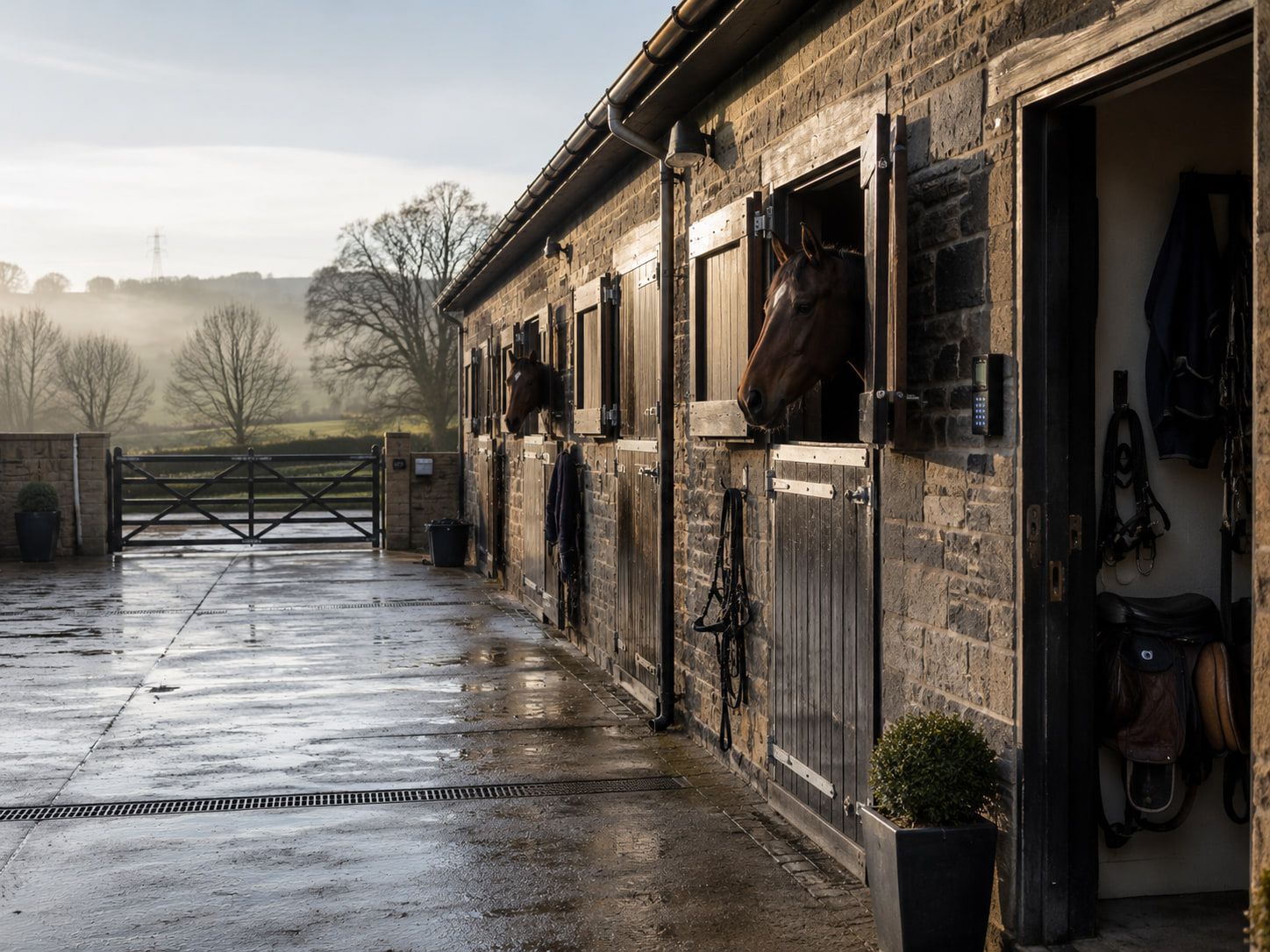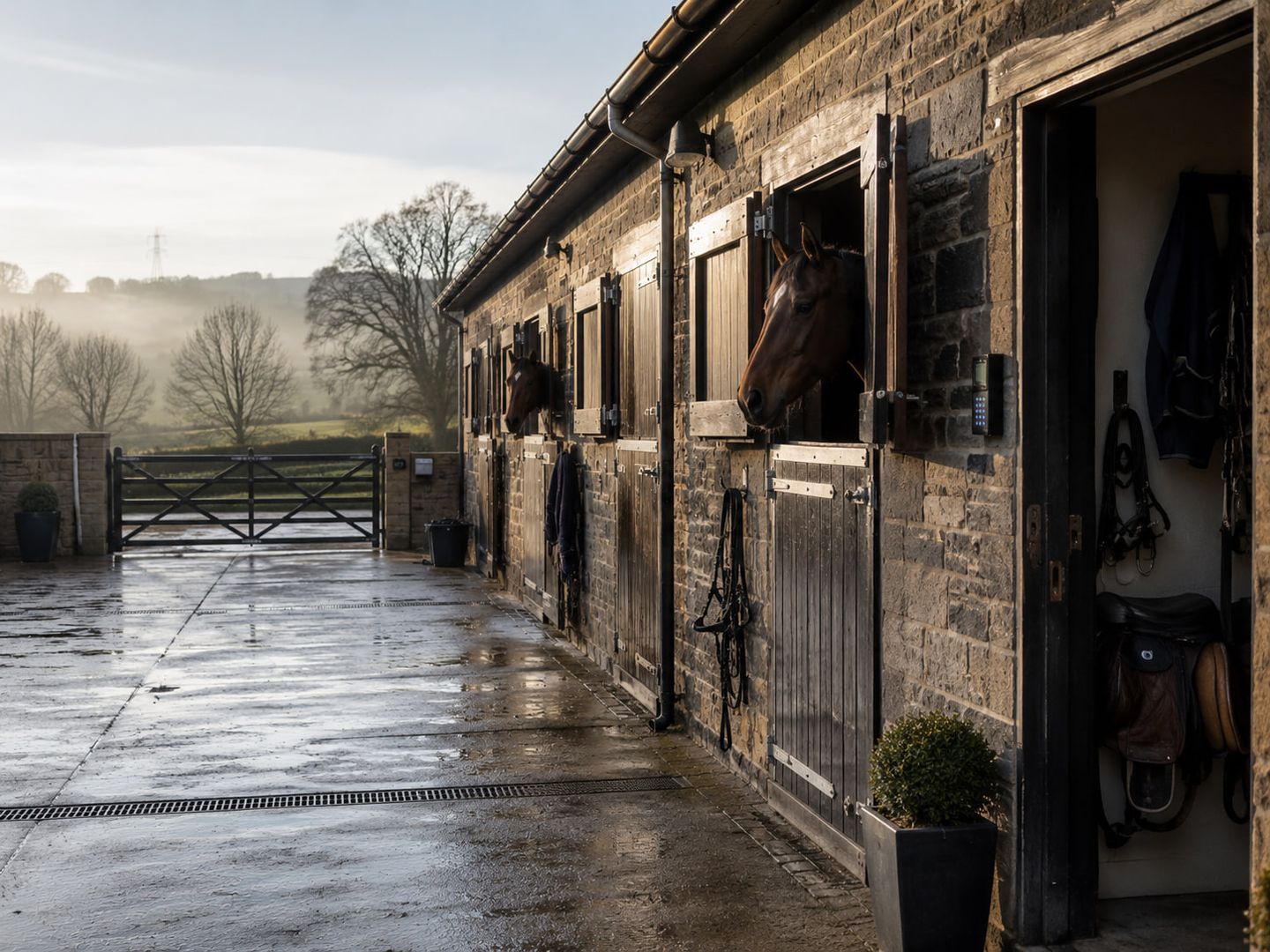

A stone stable block on a misty winter morning, two horses looking out over their doors onto a wet yard, with a five-bar gate and hills beyond.

Specialist rural security

Specialist security for equestrian, farming and rural property.

CCTV, alarms, access control and monitoring designed around the realities of remote yards, farms and country property across Wales.

Designed, installed and maintained by Secure Systems, an SSAIB certified security installer, from Abersychan in Torfaen.

SSAIB, the Security Systems and Alarms Inspection Board
Accreditation
SSAIB certified installation, by Secure Systems
What we do
Survey, design, install and maintain
Where we work
Wales and the border counties
Out of hours
24/7 emergency call-out

Why rural sites are different

Domestic kit fails on a yard for reasons that have nothing to do with the cameras.

Most of what is sold as rural security is ordinary domestic equipment with a tractor on the box. It fails on distance, on darkness, on connectivity and on false alarms. Those four things are what a survey is for.

Rural crime cost Wales an estimated £2.2 millionin 2025. Across the UK, quad and ATV theft reported to NFU Mutual rose 31 per cent, and livestock theft by almost 30 per cent.NFU Mutual Rural Crime Report 2026

  1. 01

    The site is empty for sixteen hours a day

    Yards empty out after evening stables and farms are dark by teatime in winter. The hours when nobody is there are the hours that matter, and they are the hours a system has to work without anyone watching it.

  2. 02

    The valuable building is the far one

    A camera on the farmhouse is little use when the machinery shed is three hundred metres down the track. Coverage has to follow the value, which usually means the buildings furthest from the house, the power and the router.

  3. 03

    Everything worth taking is on wheels

    Quads, trailers, horseboxes, tack, fuel and GPS units are all designed to be moved quickly. Detection at the building is often too late. What stops a loss is seeing a vehicle at the gate and knowing about it while it is still there.

  4. 04

    There is no light and no street to borrow it from

    Rural darkness is total. A camera specified for a lit car park produces a grey smear on a yard at two in the morning. Night performance is a design decision made at survey, not a setting changed afterwards.

  5. 05

    Weather and livestock set cheap systems off

    Blowing hedges, driving rain, cattle against a fence and a barn owl through a beam all trigger badly specified detection. After a fortnight of false alarms people stop responding, and a system nobody trusts is worse than no system.

  6. 06

    The broadband stops at the house

    Most rural sites have one usable connection and it is nowhere near the buildings that need watching. Getting a picture back off a stone barn in a dip is a networking problem before it is a camera problem.

What we fit

The systems we fit, and what they are actually for.

Six capabilities, specified for the site rather than picked from a package. Each one has its own page explaining how it is used on a yard, a farm and an estate.

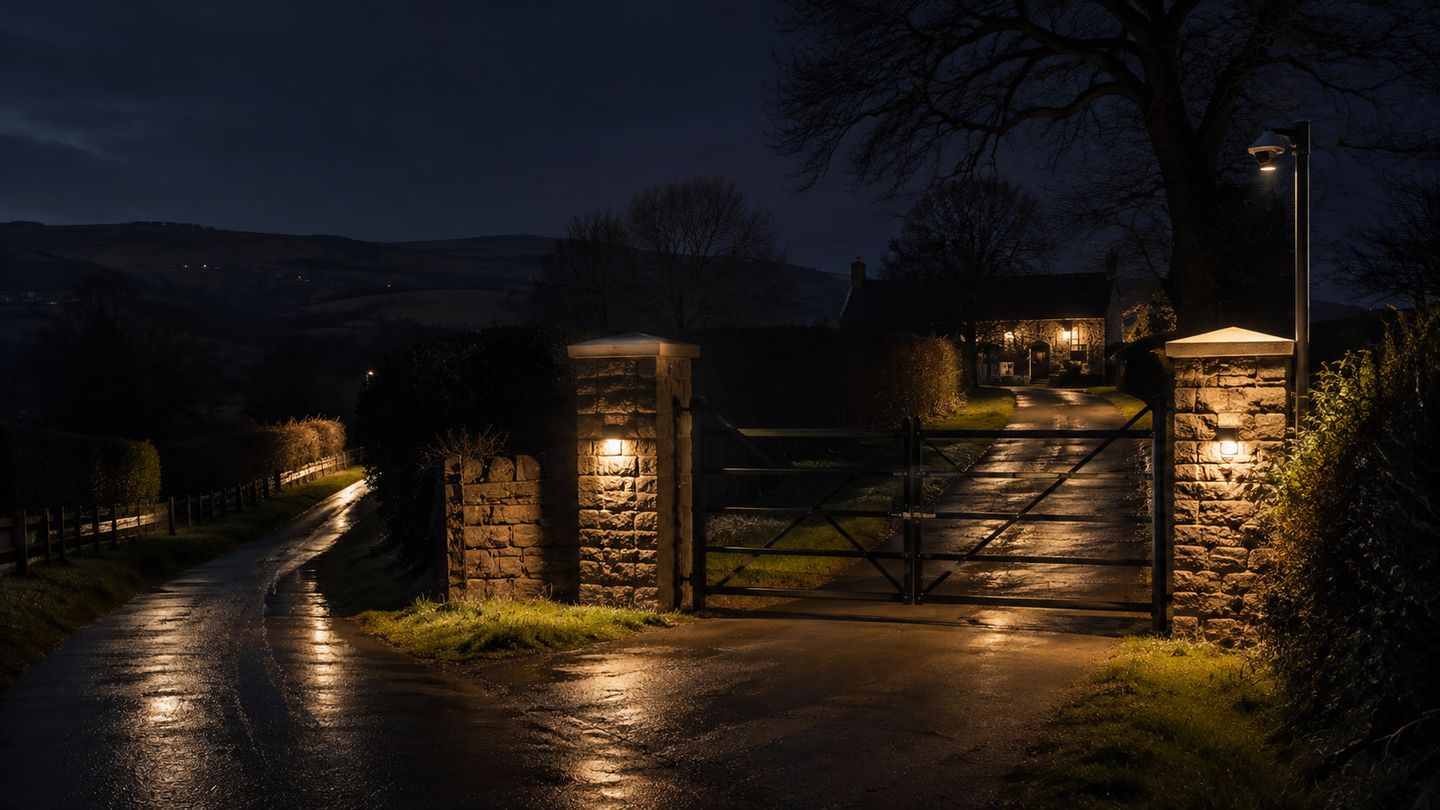
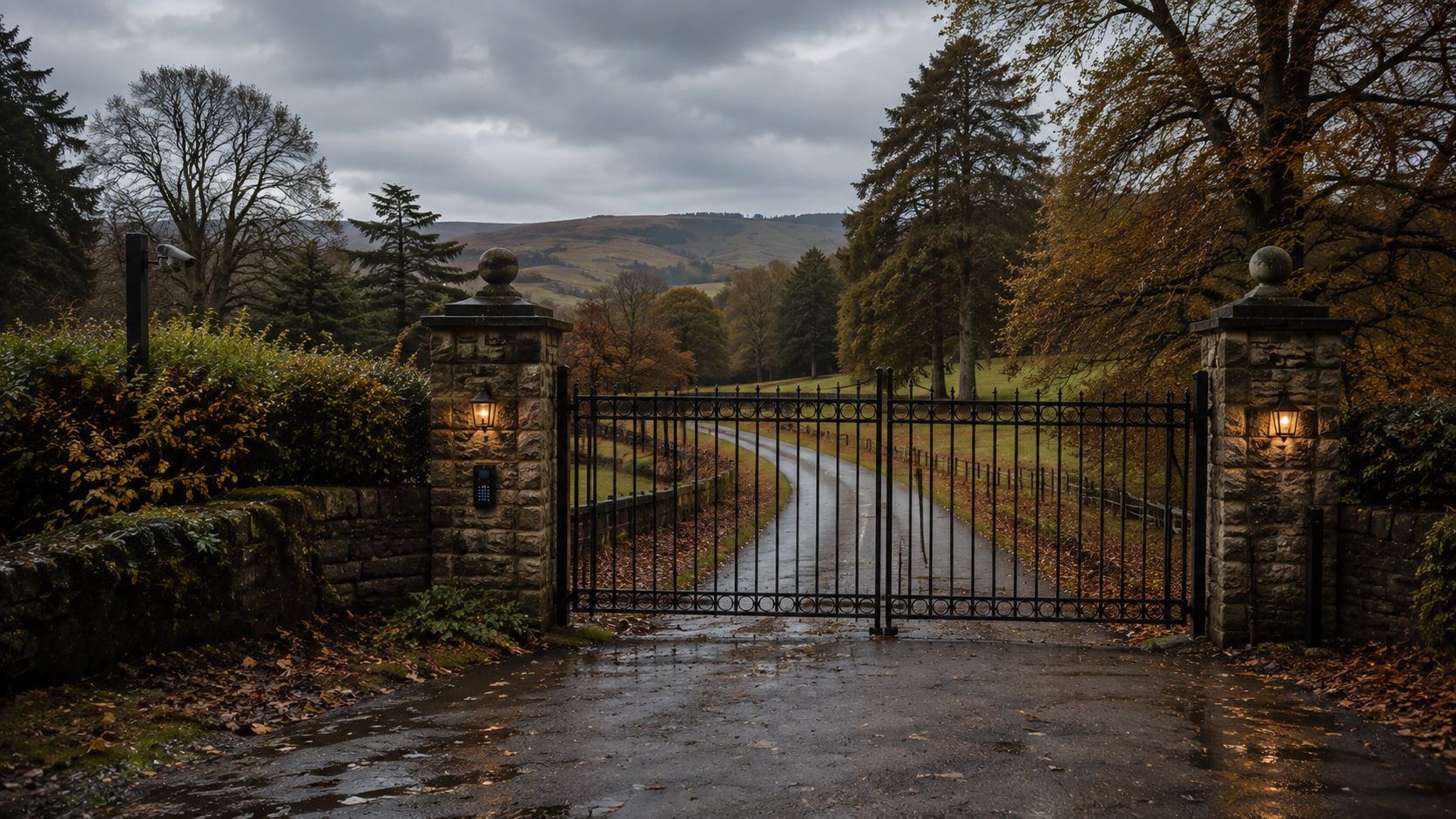
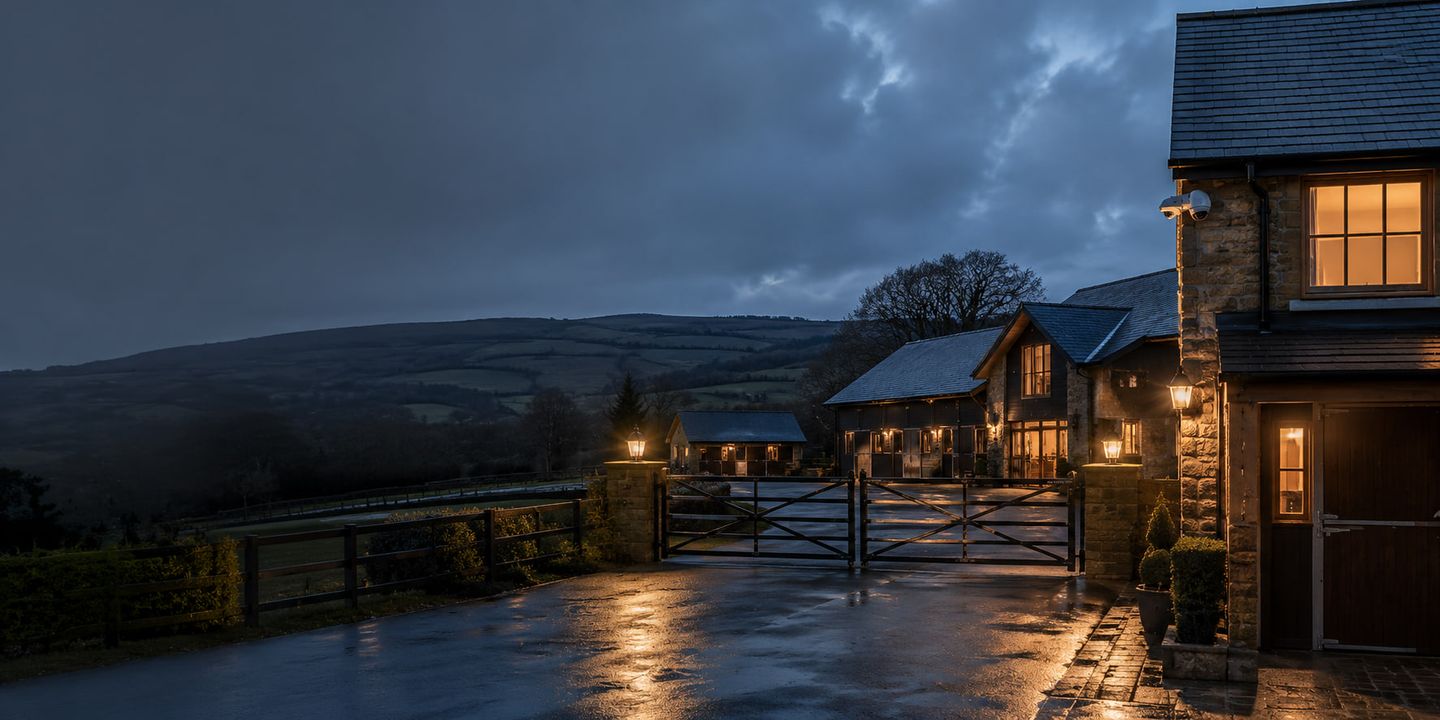
A rural entrance at night, stone gate piers lit from below, a timber gate open onto a wet driveway and a lit house set back among trees.

The gate, at night

Almost every rural loss starts at the entrance, hours before anything is taken. That is the frame worth having.

Explore CCTV

Equestrian

Yards, stables and liveries

A yard has a security problem that a house does not: a lot of people have a legitimate reason to be there, and almost none of them are employees. Liveries come at odd hours. The farrier, the vet, the feed merchant and the physio all arrive unannounced. The tack room holds twenty thousand pounds of other people’s property and the trailer is parked where it can be hitched in ninety seconds.

Insurers have taken notice. Trailers and horseboxes account for the majority of equine theft claims, and tack for most of the rest. What works is coverage at the point of entry, detection inside the tack room and the lorry park, and access you can change when a livery leaves without recutting every key on the yard.

  • Stable yards, livery yards, studs and competition yards
  • Tack rooms, feed stores and rug rooms
  • Horseboxes, trailers and the lorry park
  • Foaling and welfare monitoring
  • Staff, livery and visitor access
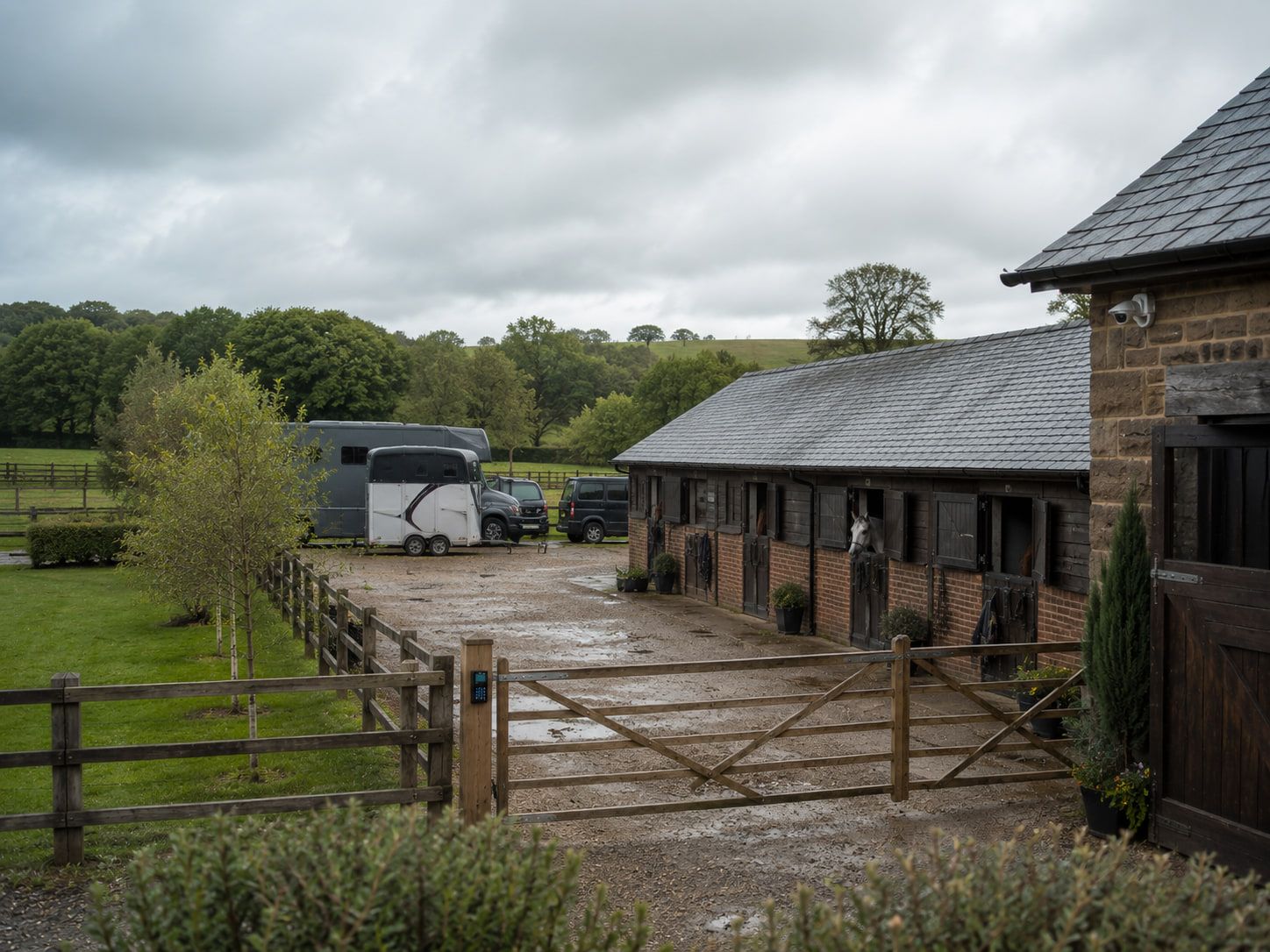
A stable yard under low cloud, a horsebox and trailer parked by the buildings and a timber five-bar gate closed across the entrance.
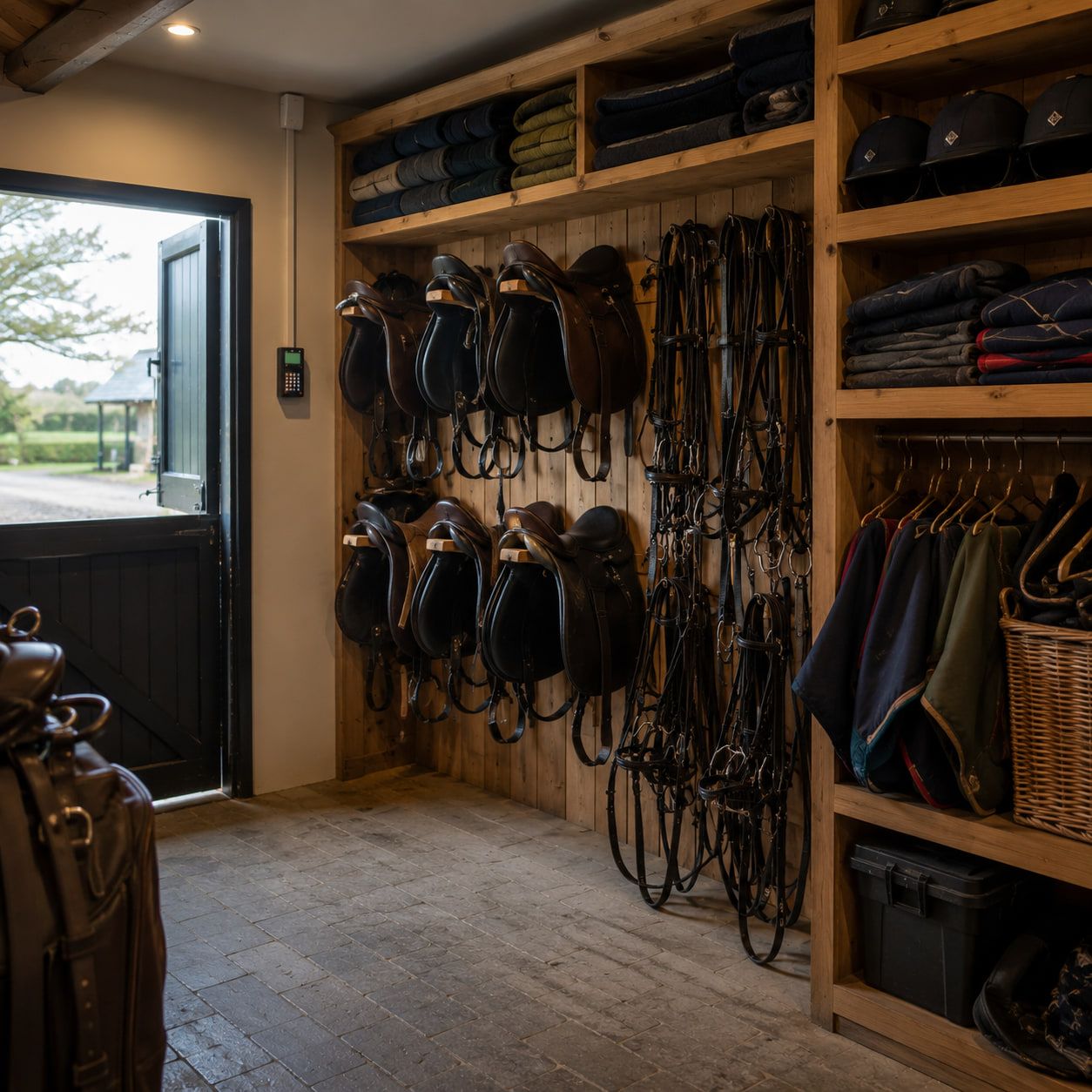
The inside of a tack room, saddles and bridles racked along a timber wall, rugs folded on shelves, and a keypad beside the open stable door.
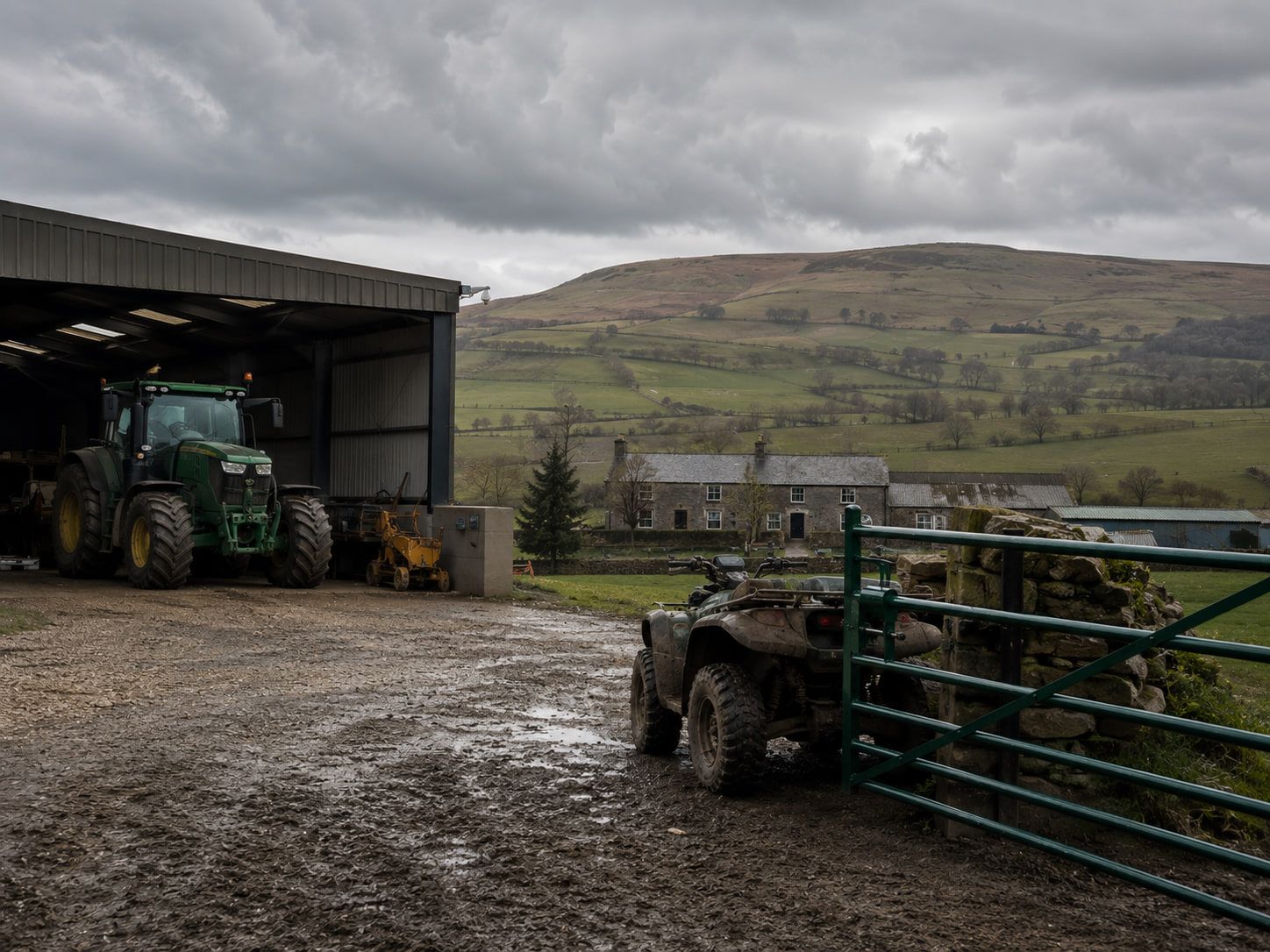
A working farmyard on a grey day, a tractor under an open machinery shed and a quad bike parked by a steel field gate, with hill grazing behind.

Farming & agriculture

Machinery, fuel and land

A working farm is a collection of separate security problems that happen to share a postcode. The workshop, the fuel tank, the machinery shed, the grain store and the stock buildings each have a different risk, a different value and usually a different distance from the house.

The pattern we see is reconnaissance first, then a return visit. That is why the gate and the track matter more than the yard light. A camera that reads a plate at the entrance, at night, in rain, gives you something the police can act on. Detection on the buildings gives you the time to respond.

  • Machinery sheds, workshops and grain stores
  • Fuel tanks, quads and GPS units
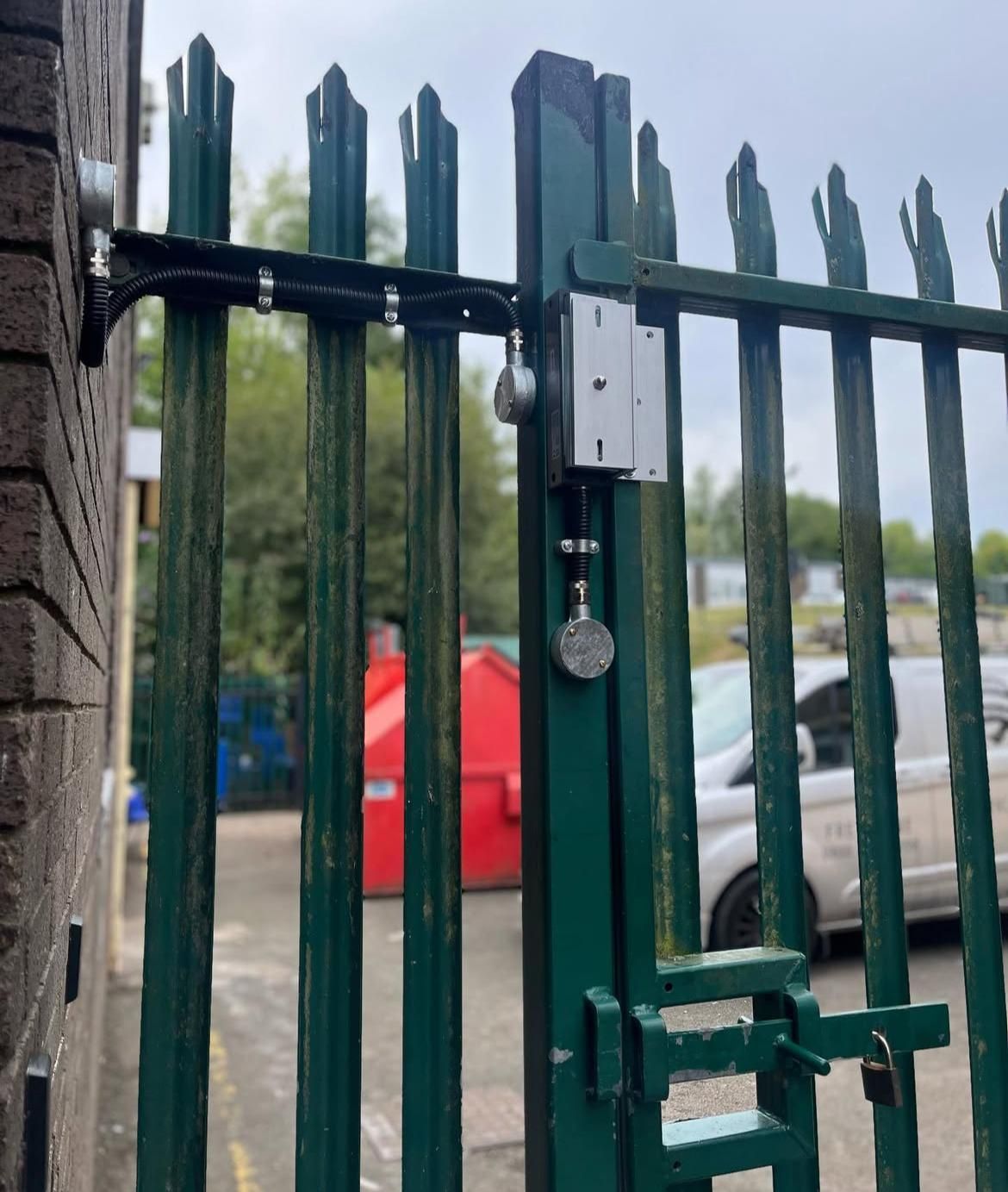
  • Remote entrances, tracks and field gates
  • Outbuildings with no power or network
  • Perimeter and yard coverage

Connectivity & power

Remote does not have to mean disconnected.

The hard part is rarely the camera. It is getting a picture back from a building with no broadband and no spare power, and getting an alert to a person who can act on it.

  1. 01

    Buildings a field apart

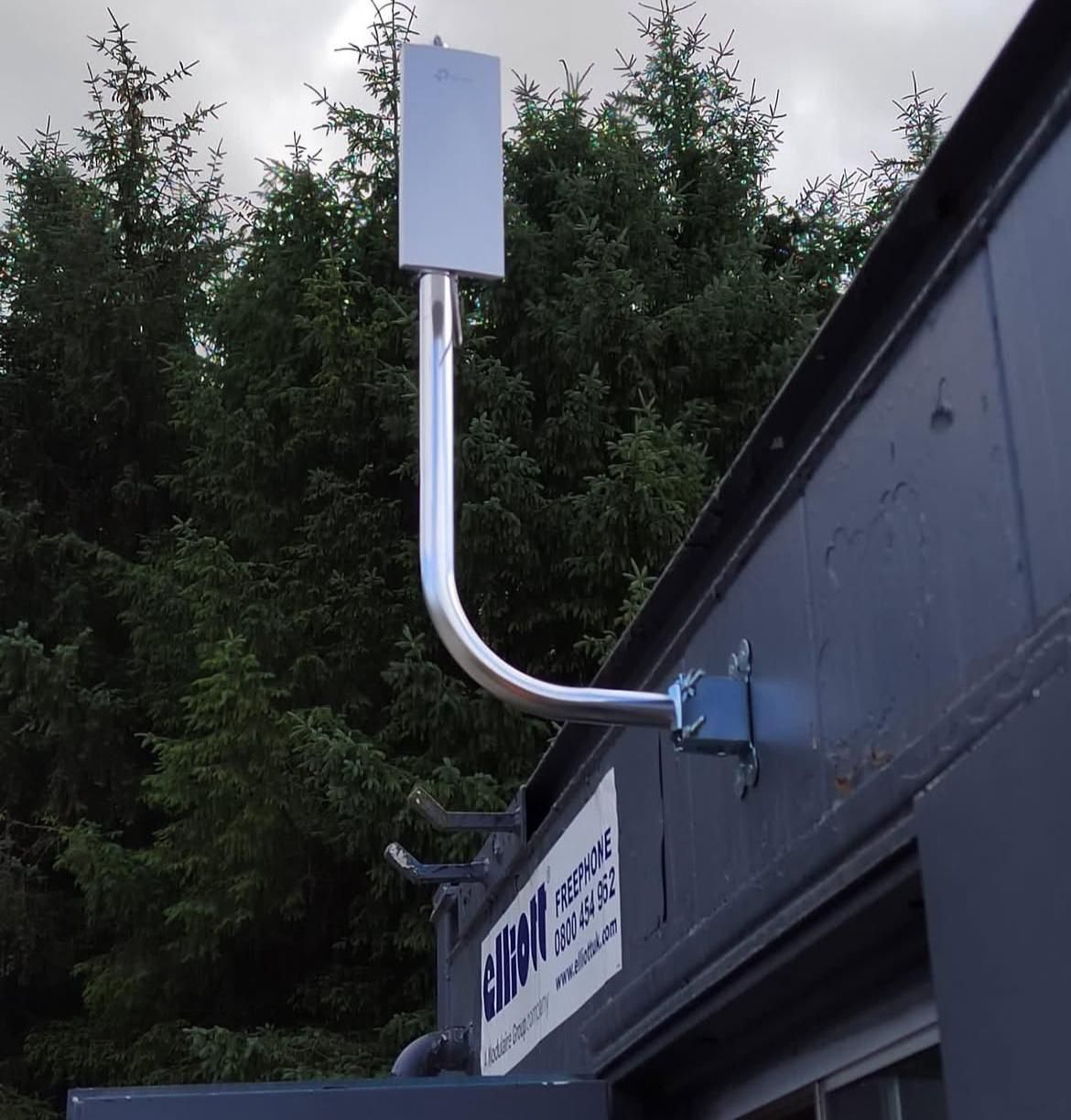
    Where a cable run is impractical, a licence-free point-to-point link carries a building back to the recorder over line of sight. It is usually cheaper than trenching and it does not care that the track is in the way.

  2. 02

    Sites with no usable broadband

    Where there is no fixed line worth using, a 4G router with an aerial in the right place will carry alerts and remote viewing. We check actual signal at the building during the survey rather than trusting a coverage map.

  3. 03

    Buildings with no power

    Standalone solar and battery units cover a gateway, a field entrance or a stack where running a supply is not worth it. They have real limits in a Welsh January, and we will tell you where those limits fall before you buy one.

  4. 04

    Getting a response, not just a recording

    Footage after the event is evidence. What changes the outcome is an alert that reaches a person while a vehicle is still on the track, routed to whoever is actually able to act on it at that hour.

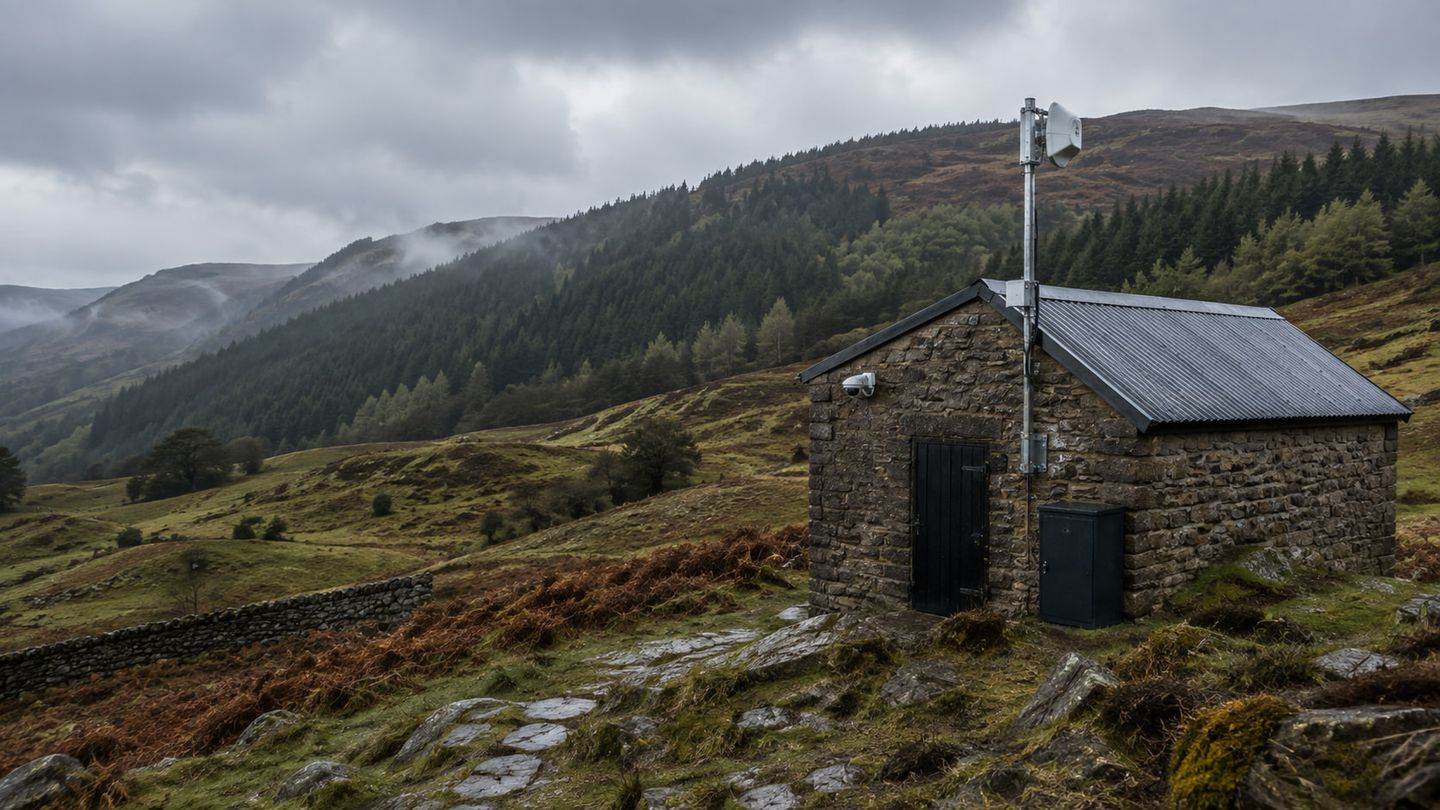
A stone outbuilding high on a bracken hillside in poor weather, carrying a mast with a wireless dish and a camera on its gable.

How it works

A survey, then a specification you can read.

No charge, no obligation, and no equipment list until someone has stood in the yard.

  1. 1

    Understand the site

    Gates, tracks, yard, stable block, tack room, workshop, fuel store, outbuildings. We want to know what has already happened here, what worries you, and who comes and goes.

  2. 2

    Survey the risks

    Where the power is, what the broadband and mobile signal really do at each building, what cable routes exist, and which buildings need a wireless link or their own connection.

  3. 3

    Design the system

    Camera positions and what each one is there to see, detection zones, access points, and what is deliberately not included. Priced for the property, with phasing if it makes sense to start with the gate and the tack room.

  4. 4

    Install and configure

    Tidy cabling, weatherproof terminations, and commissioning done with you present so you leave knowing how to arm it, who gets the alerts and what to do at 3am.

  5. 5

    Maintain and support

    Lens cleaning, seal checks, battery replacement and signal tests on a schedule, plus someone who answers the phone. Rural kit weathers faster than commercial kit.

What customers say about the engineers

Verified Google reviews of Secure Systems, the company that carries out every Equestrian Security Solutions installation. They are commercial and domestic customers rather than yards, so read them for how the team works rather than for equestrian experience.

  • We have used Secure Systems for years and have always had 5 star service on both fire and intruder systems. Paul and his team are top class installers and I cannot recommend them highly enough.

    Keith England

    Fire and intruder systems, maintained over several years.

    Google review of Secure Systems

  • Secure systems did a fantastic job of providing new remote access security cameras, security and fire alarm systems in our new warehouse. They utilised some existing infrastructure and only installed new when needed. Providing a high quality, cost effective service, with excellent response times.

    Alexander Dodd-Jones

    Remote-access cameras, reusing existing infrastructure.

    Google review of Secure Systems

  • Very professional service and fully explained types of system they offer and the best type for me. Very clean installation and no damage to my property. Great after service maintenance as a slight technical fault on my system was fixed in less than 24hrs. I would happy recommend this company.

    andrew mills

    Specification advice, clean installation and after-service.

    Google review of Secure Systems

Where we work

Wales, and across the border where it makes sense.

The engineering base is at Abersychan in Torfaen, so south and mid Wales is home ground and gets the shortest response times. We work throughout Wales, from Monmouthshire and the Brecon Beacons to Powys, Ceredigion and Carmarthenshire, and into Herefordshire, Shropshire and Gloucestershire where the site suits it.

Rural work is different from town work in one practical way: we would rather cover fewer counties properly than claim a national footprint and take three days to reach a fault. If your postcode is outside a sensible maintenance radius we will say so on the phone rather than after the install.

Coverage and service area

A lit gatehouse and closed estate gates reflected in a wet road at night, with dark hills behind.

Next step

Book a security survey of your yard

An engineer walks the site with you, works out where the gaps actually are, and writes it up. You get a specification and a price for the property in front of us, not a package picked before we arrived.

Book a Security Survey0800 118 5939

Monday to Friday, 08:00 to 18:00. 24/7 emergency call-out.