Intruder alarms
Intruder alarms for yards, farms and outbuildings
The measure of a rural alarm is not how many devices it has. It is whether the last person to leave still arms it in February, after a winter of weather.
Most rural alarm work we are called to is not a first installation. It is a system somebody stopped using. The pattern is consistent: detection put in the wrong places, no thought given to animals or weather, a bell on a wall nobody can hear, and a fortnight of three-in-the-morning activations that taught everyone to ignore it.
Which is why the survey spends more time on what is in each building and what moves through it than on the panel. A smaller system that gets armed every night protects a site. A comprehensive one that does not, protects nothing.
Where detection goes
Buildings first, then how each one behaves.
Tack rooms and feed stores
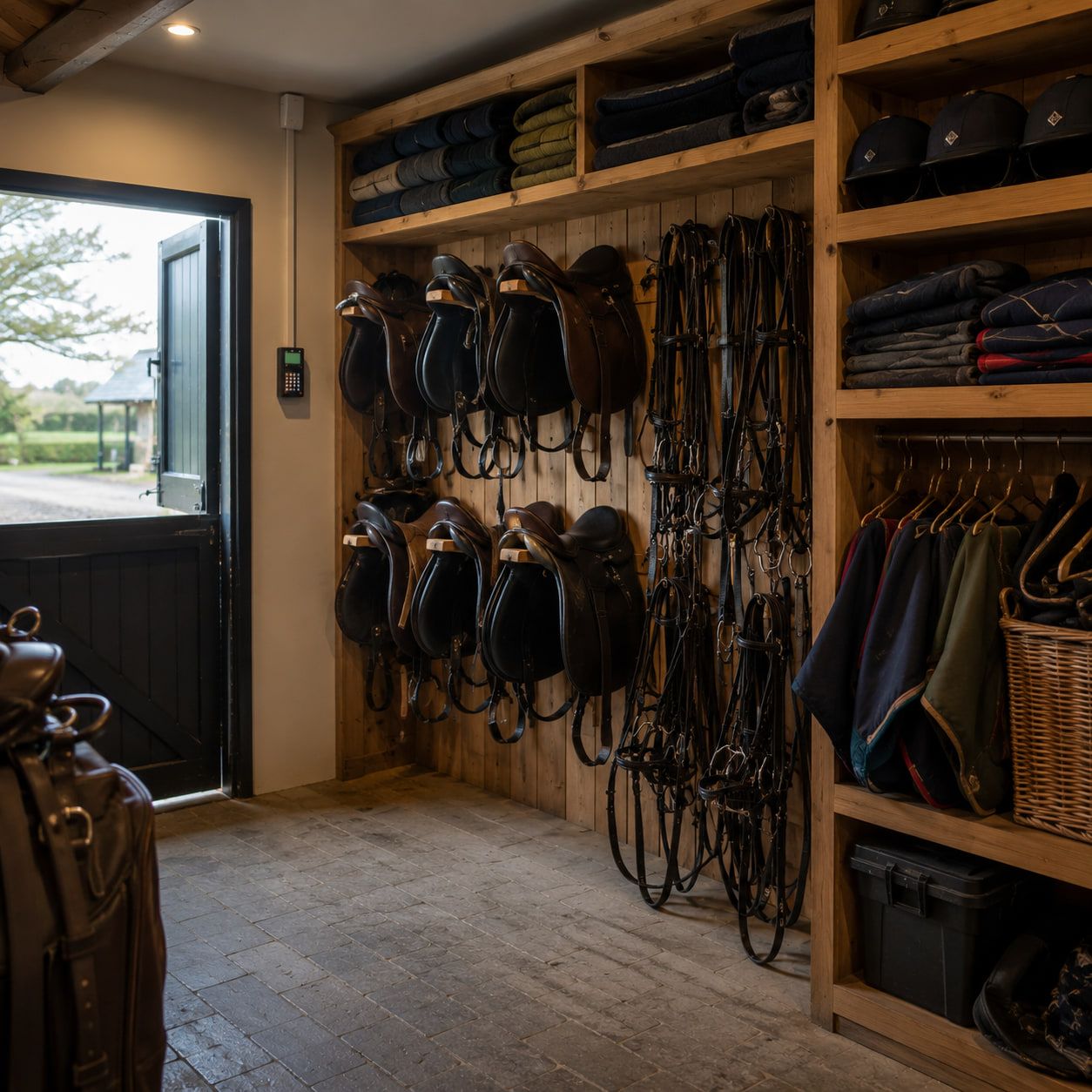
The single highest-value room on most yards, holding property belonging to people who are not you. Detection inside the room, a local sounder, and a signal that reaches a phone rather than only the yard.
Workshops and tool stores
Easy to reach, rarely overlooked, and the loss stops work the next morning. Usually the first building on a farm to be alarmed after the house.
Machinery sheds and fuel stores
Large, open, cold and full of movement from birds and draughts. This is where sensor choice earns its keep, because the wrong detector in a big steel shed produces false activations every windy night.
Outbuildings with no mains supply
Wireless devices with long battery life, or a hybrid system that runs wired where there is power and wireless where there is not. Battery status gets monitored so a flat sensor is a message rather than a silent gap.
The house, on its own settings
Farmhouses and yard houses want to be part-armed at night with people asleep upstairs and a dog moving about. That is a zoning decision, and it is the difference between a system that gets set and one that does not.
Designing one that stays armed
False alarms are the real failure mode
A system that goes off for nothing gets switched off. Cattle against a fence, blowing hedges, driving rain and a barn owl through a beam are all normal on a rural site. Detector type, mounting height, masking and zoning are chosen with that in mind, not left at factory defaults.
Signalling that works where you are
A bell on a wall is only useful if somebody is within earshot, which on a remote holding is often nobody. Alarms are signalled to a phone, and where the risk justifies it to a monitoring centre with an agreed escalation.
Detection before the door, where it helps
External detection at a yard entrance or around a compound gives you warning while there is still time to respond. It has to be specified carefully on a rural site or it becomes the thing that cries wolf.
Working with the cameras
An activation that also pulls up the camera covering that zone turns a question into an answer. It is also what lets a monitoring centre verify an alarm rather than escalating every one.
Certificated installation where your insurer asks for it
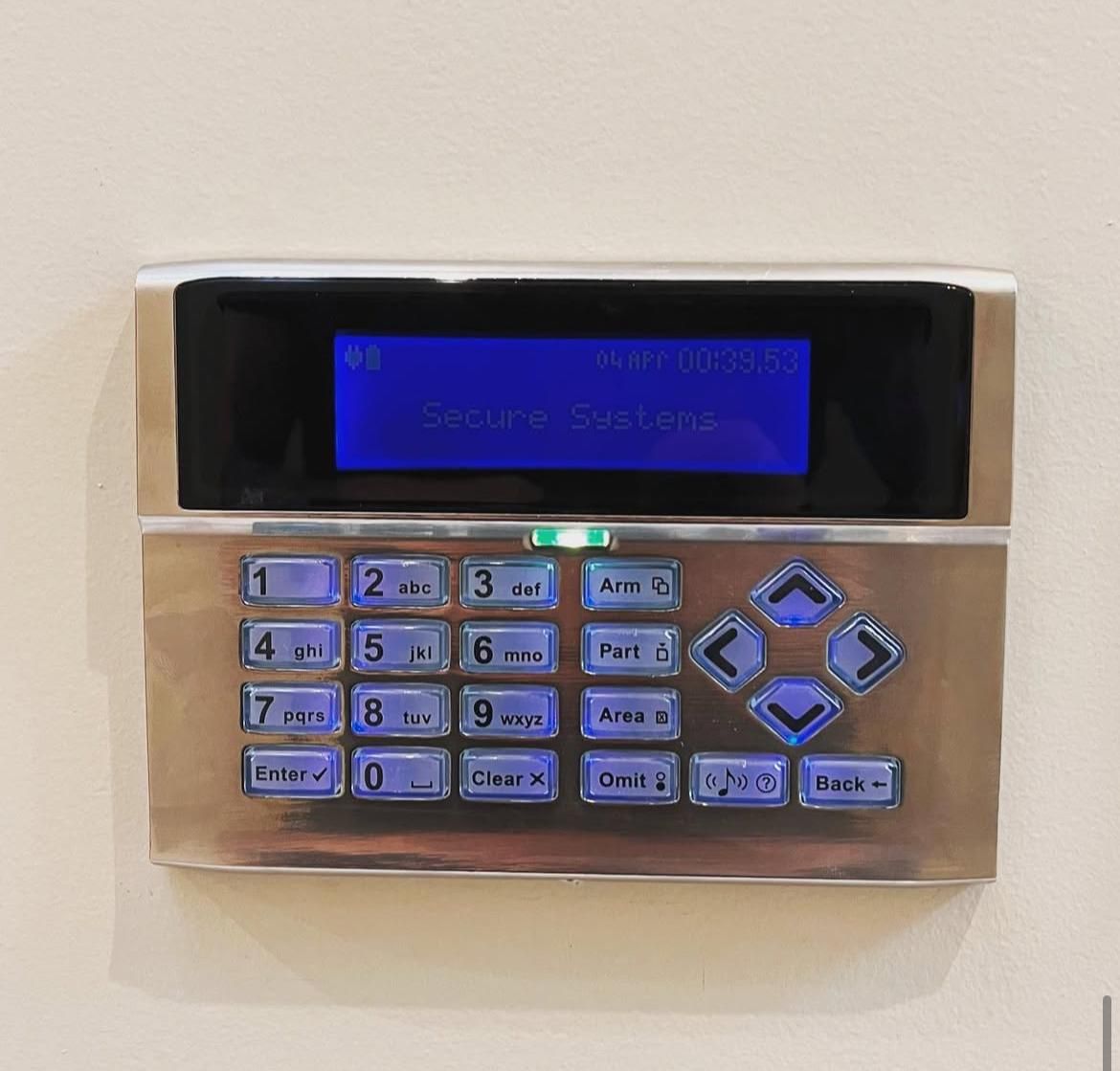
Some insurers specify that intruder alarm work is carried out by an SSAIB or NSI certificated company. Every system here is installed by Secure Systems, which is SSAIB certified. Send us your insurer's wording before the survey and we will tell you plainly whether we meet it.
The test is February
An alarm is only worth what it detects on the night nobody is there to hear it.
Explore remote monitoringIn practice
Where detection actually goes.
Zoning is the whole job. A rural alarm that cannot be part-set around the way the site is used will stop being set at all.
On an equestrian yard
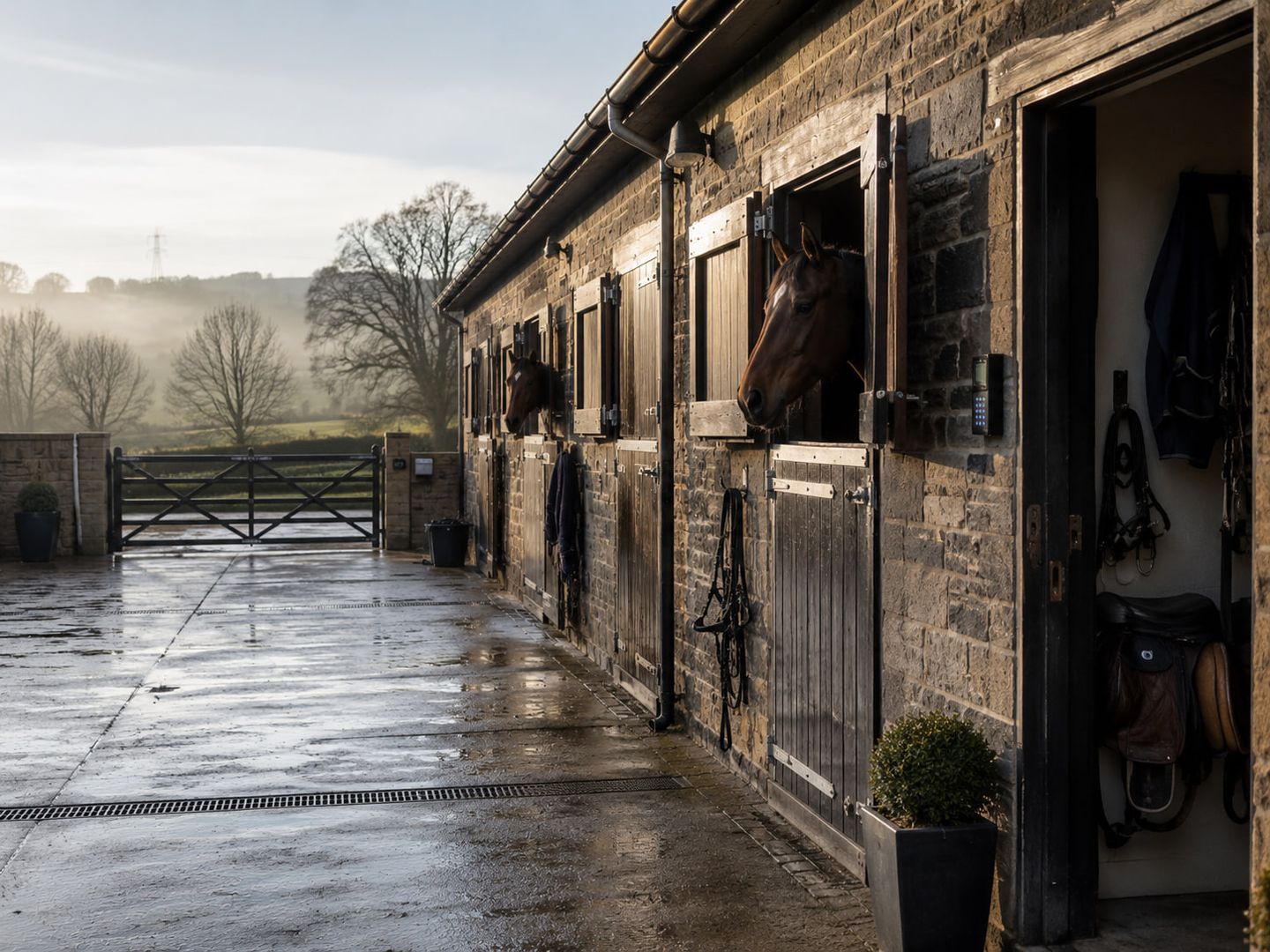
The tack room, the rug and feed store and the office get detection; the yard itself usually does not, because horses, cats and weather live there. Part-setting lets the tack room stay armed through evening stables, which is when most of the risk actually sits.
View livery yardsOn a working farm
Workshop, grain store, fuel and the machinery shed, zoned so each can be set independently. Detection is chosen and sited to survive dust, birds and a building that is nine degrees in January without producing a fortnight of false activations.
View farm securityOn a rural estate
The main house, the estate office, staff cottages and outbuildings on one system with separate user codes and separate zones, so a holiday let changing over does not mean the whole estate is unset.
View rural estates
Questions we get asked
Wired or wireless?
Both, usually. Wired where there is a sensible cable route and a power supply, wireless for outbuildings and retrofits where lifting floors or chasing walls is not worth it. Most rural systems end up hybrid, and that is a survey decision rather than a preference.
Can you take over the alarm we already have?
Frequently. If the panel is a current model and the detection is sound, we can service and take on maintenance for it. If the panel is obsolete and unsupported we will say so rather than nursing it along.
Do I need police response?
Police response requires a monitored, graded system installed and maintained to the relevant standard by a certificated company, and it comes with rules about false activations. It is right for some sites and unnecessary for others. We will talk you through what it involves before you commit to it.
What happens in a power cut?
Panels run on a standby battery sized for a defined period, and signalling is chosen so a cut mains supply or a cut phone line does not silently disable the system. Rural power is less reliable than urban power, so this gets specified rather than assumed.
Will it work with horses and stock in the buildings?
Only if it is designed for them. Buildings with animals in are either handled with detection that tolerates them, protected at the perimeter of the building instead, or deliberately left off the system. Pretending an animal-occupied barn can be alarmed like an office is how yards end up with a system nobody arms.
Related systems
What an alarm usually sits alongside
Most sites end up with two or three of these working together. Each has its own page.
CCTV
Cameras that read a number plate at the gate and a person at the barn door, in the dark, in the rain.
Access control & gates
Entry that survives twenty liveries, a farrier, a vet and a feed delivery, without a key under the water trough.
Remote monitoring & connectivity
Getting a picture off a building with no broadband, and getting a response when something happens at 3am.
Fire detection
Early warning in stable blocks, hay and straw stores and workshops, where a fire is unsurvivable within minutes.
Servicing & maintenance
Lens cleaning, seal checks, battery replacement and signal tests, because rural kit weathers faster.
Next step
Get an alarm specified for the buildings you have
A survey works through each building, what is in it, what moves through it and who needs to arm it. You get zoning, device positions and a price, and an honest note on anything we think is not worth alarming.